

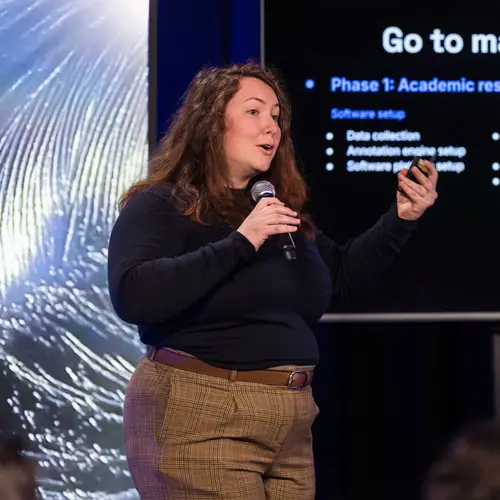

Portrait of Paul François

Paul François

Associate Academic Member
Full Professor, Université de Montréal, Department of Biochemistry and Molecular Medicine
Adjunct Professor, McGill University, Department of Physics
Research Topics
Computational Biology
Dynamical Systems
Information Theory
Machine Learning Theory

Biography

Paul François is a full professor in the Department of Biochemistry and Molecular Medicine in the Faculty of Medicine, Université de Montréal, and an adjunct professor in the Department of Physics at McGill University.

François is a biophysicist whose research focuses on the application of computational methods (including machine learning) to evolution, embryonic development and immunology. He is an associate academic member of Mila – Quebec Artificial Intelligence Institute.

Past positions:

- Associate professor of physics, McGill University (2016–2023)

- Assistant professor of physics, McGill University (2010–2016)

Education and training:

- Postdoc, Siggia Lab, The Rockefeller University, U.S. (2005–2010)

- PhD in theoretical physics, Hakim Lab, École Normale Supérieure / Université Paris VII, France (2002–2005)

- MSc in theoretical physics, École Normale Supérieure / École Polytechnique, France (2001–2002)

- BEng, major in physics, École Polytechnique (1998–2001), Promotion X 98

Some awards:

- 2019 Rutherford Memorial Medal in Physics, Royal Society of Canada

- 2017 CAP Herzberg Medal, Canadian Association of Physicists

- 2015 McGill Principal’s Prize for Outstanding Emerging Researcher

- 2014 Simons Investigator in Mathematical Modeling of Living Systems

- 2007 Lavoisier Postdoctoral Fellowship (from France’s Ministry of Foreign Affairs)

- 2007 Prix Le Monde de la recherche universitaire (awarded by the French newspaper Le Monde)

Current Students

Master's Research - Université de Montréal
PhD - Université de Montréal
Principal supervisor :
PhD - McGill University
Postdoctorate - Université de Montréal

Publications

TCR/Chimeric Antigen Receptor (CAR) Cross-Antagonism to Fine-Tune CAR-T cell Immunotherapy
Grégoire Altan-Bonnet
Taisuke Kondo
François X. P. Bourassa
Sooraj R. Achar
Justyn DuSold
Pablo Cespedes
Madison Wahlsten
Guillaume Gaud
Paul E Love
Mike Dustin
Naomi Taylor
Chimeric antigen receptor (CAR) T cells, are created by extracting T cells from a cancer patient, engineering them to express a CAR targetin… (see more)g a tumor specific molecule, then reintroducing them back into the patient. A patient’s T cells contain their own endogenous T cell receptors (TCRs) however, which could potentially interact with the exogenous CAR inserted into the cell. In this study, we examine how TCR and CAR signals interact upon CAR-T activation. We show that weak TCR stimulation can reduce (antagonize) or increase overall CAR-T response, both in vitro and in vivo, across multiple tumor models, in both mouse and human T cells. We further show that the behavior of these TCR/CAR interactions can be manipulated by changing various characteristics of the TCR, CAR, and associated ligands. While this behavior is complex, we show that it can be described by a single mathematical model based on the adaptive kinetic proofreading scheme of ligand discrimination. We conclude by presenting potential applications for cancer immunotherapy. Intramural Research Program of the National Cancer Institute
What did the T cell see? A deep-learning model of CD8+ T cell activation reveals sharp antigen discrimination at the single cell level
Madison Wahlsten
Amin Akhshi
Sooraj R. Achar
Anagha Yogam Krishnan
Grégoire Altan-Bonnet
Immunotherapies such as checkpoint blockade antibodies to block T cell exhaustion have been successful in several cancers such as non-small … (see more)cell lung cancer and melanoma, but limited in others (e.g., pancreatic or prostate carcinomas) owing to differences in tumor antigenicity. Therefore, quantifying tumor antigenicity is critical for successful immunotherapies. Our lab has shown that antigenicity can be encoded in a single parameter derived from bulk cytokine dynamics in ex vivo co-cultures between antigen presenting cells (APCs) and T cells. Here we built a model that can capture the antigenicity seen by individual cells. Using a custom robotic platform, we generated high-throughput kinetics of T cell activation in co-culture with APCs by analyzing cells at various timepoints across a large set of activation conditions. We performed spectral flow cytometry to measure the expression of up to 30 surface markers and intracellular signals per cell. To analyze our content-rich datasets, we designed a machine learning-based model that can classify the antigen seen by an individual cell using expression values from flow cytometry. The model performs well not only at classifying T cells (ROC-AUC > 0.91), but also APCs (ROC-AUC > 0.88), suggesting that each individual leukocyte may register the quality of antigen being presented. Blocking cytokine signaling disrupted this antigen classification. Our study demonstrates that every individual lymphocyte can bridge local and global response to achieve high discriminatory power of antigens.
New wave theory
Evolution of cell size control is canalized towards adders or sizers by cell cycle structure and selective pressures
Felix Proulx-Giraldeau
Jan M Skotheim
Cell size is controlled to be within a specific range to support physiological function. To control their size, cells use diverse mechanisms… (see more) ranging from ‘sizers’, in which differences in cell size are compensated for in a single cell division cycle, to ‘adders’, in which a constant amount of cell growth occurs in each cell cycle. This diversity raises the question why a particular cell would implement one rather than another mechanism? To address this question, we performed a series of simulations evolving cell size control networks. The size control mechanism that evolved was influenced by both cell cycle structure and specific selection pressures. Moreover, evolved networks recapitulated known size control properties of naturally occurring networks. If the mechanism is based on a G1 size control and an S/G2/M timer, as found for budding yeast and some human cells, adders likely evolve. But, if the G1 phase is significantly longer than the S/G2/M phase, as is often the case in mammalian cells in vivo, sizers become more likely. Sizers also evolve when the cell cycle structure is inverted so that G1 is a timer, while S/G2/M performs size control, as is the case for the fission yeast S. pombe. For some size control networks, cell size consistently decreases in each cycle until a burst of cell cycle inhibitor drives an extended G1 phase much like the cell division cycle of the green algae Chlamydomonas. That these size control networks evolved such self-organized criticality shows how the evolution of complex systems can drive the emergence of critical processes.
Universal antigen encoding of T cell activation from high-dimensional cytokine dynamics
Sooraj R. Achar
François X. P. Bourassa
Thomas J. Rademaker
Angela Lee
Taisuke Kondo
Emanuel Salazar-Cavazos
John S. Davies
Naomi Taylor
Grégoire Altan-Bonnet
Endocytic proteins with prion-like domains form viscoelastic condensates that enable membrane remodeling
Louis-Philippe Bergeron-Sandoval
Hossein Khadivi Heris
Catherine L. A. Chang
Caitlin E. Cornell
Sarah L. Keller
Adam G. Hendricks
Allen J. Ehrlicher
Rohit V. Pappu
Stephen W. Michnick
The uptake of molecules into cells, known as endocytosis, requires membrane invagination and the formation of vesicles. A version of endocyt… (see more)osis that is independent of actin polymerization is aided by the assembly of membraneless biomolecular condensates at the site of membrane invagination. Here, we show that endocytic condensates are viscoelastic bodies that concentrate key proteins with prion-like domains to enable membrane remodeling. A distinct molecular grammar, namely the preference for glutamine versus asparagine residues, underlies the cohesive interactions that give rise to endocytic condensates. We incorporate material properties inferred using active rheology into a mechanical model to explain how cohesive interactions within condensates and interfacial tensions among condensates, membranes, and the cytosol can drive membrane invagination to initiate endocyosis.